

Last Updated on October 8, 2026 by Dee
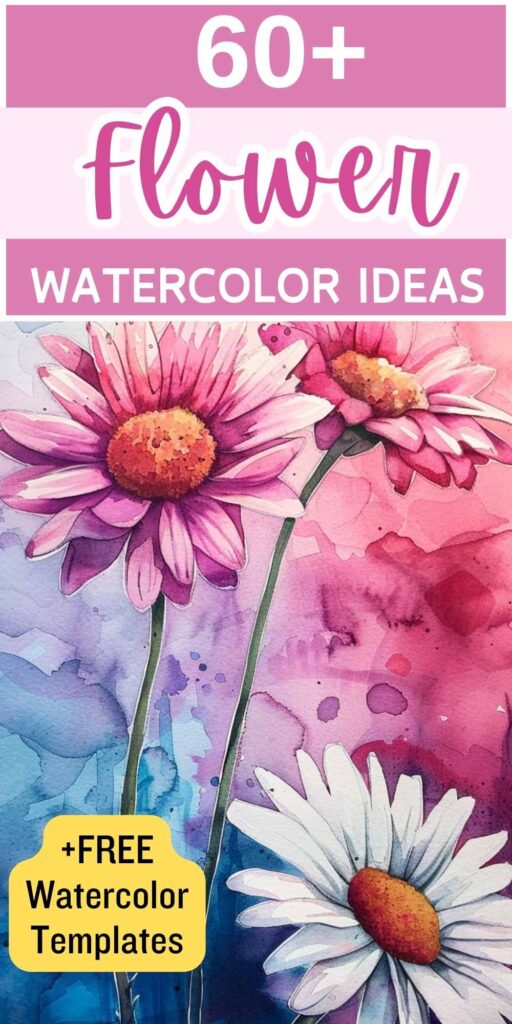
Here are beautiful watercolor flower painting ideas, plus free flower watercolor templates to go with them.
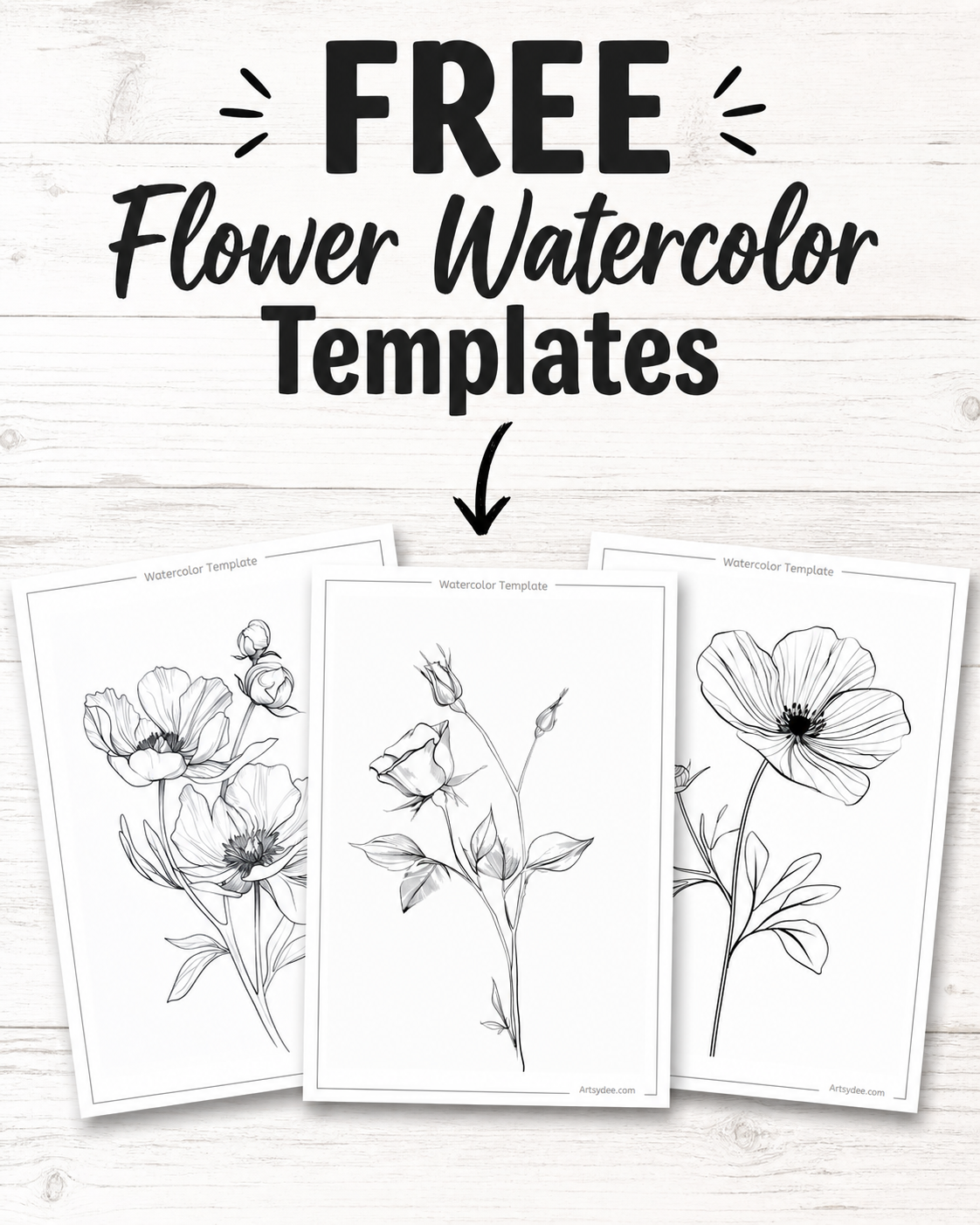
I’ve put together 23 free printable watercolor flower templates you can trace, paint inside, or use as warm-up reference — sunflowers, poppies, peonies, wildflowers, the lot. Grab them in the form right below this paragraph, then keep scrolling for a flower-by-flower breakdown (easy, intermediate, and advanced), the four techniques every flower painter needs, and the mistakes that trip up almost everyone in the first few weeks.
Watercolor flowers might be the most forgiving thing you can paint. The medium loves a soft edge. Petals already want to bleed into each other. A slightly wonky stem still reads as a stem. Which is wonderful news if you’re standing in front of a blank sketchbook page wondering whether you can pull this off — yes, you can, and this post will show you exactly how.
Table of Contents
Table of Contents
What makes watercolor flowers different from regular watercolor painting?
Quick answer: Watercolor flowers rely on letting the paint do the work — soft wet-on-wet blends, loose petal shapes, and the natural bleed of pigment on textured paper. Unlike landscapes or portraits, you don’t need careful drawing or photo-realistic detail. The medium’s tendency to flow and granulate is exactly what makes flowers look alive.
If you’ve tried watercolor before and ended up frustrated by stiff, over-controlled shapes, flowers are the antidote. The whole point is to let go. A poppy painted in three loose strokes looks more like a poppy than one painted in twenty careful ones. The magic happens in the moments where you stop trying to control the water and just watch the pigment do its thing.
That’s also why flowers are the easiest entry point into a daily watercolor practice. You can finish a tiny floral study in 10–15 minutes, the subject matter is endlessly variable (different blooms, different colors, different arrangements), and there’s no right or wrong way to interpret what you see. Loose, painterly, slightly imperfect — that’s the whole vibe.
Painting these florals? My Patreon reference sets come with colour-recipe cards so every petal and leaf is the perfect shade.
Browse the reference sets →The 5 easiest watercolor flowers to paint as a beginner
Quick answer: The five easiest watercolor flowers for beginners are poppies, daisies, lavender, hydrangeas, and wildflower bouquets. All of them have forgiving shapes, work beautifully in loose wet-on-wet style, and don’t require fussy detail to read correctly. Start here before tackling tulips or roses.
Most beginners reach for roses first — and most beginners get frustrated. Roses are complex spirals that genuinely need understanding of structure. Save them for week six. These five flowers below give you the satisfaction of a finished painting in your first sitting, while quietly teaching you the fundamentals you’ll need later on.
Poppies
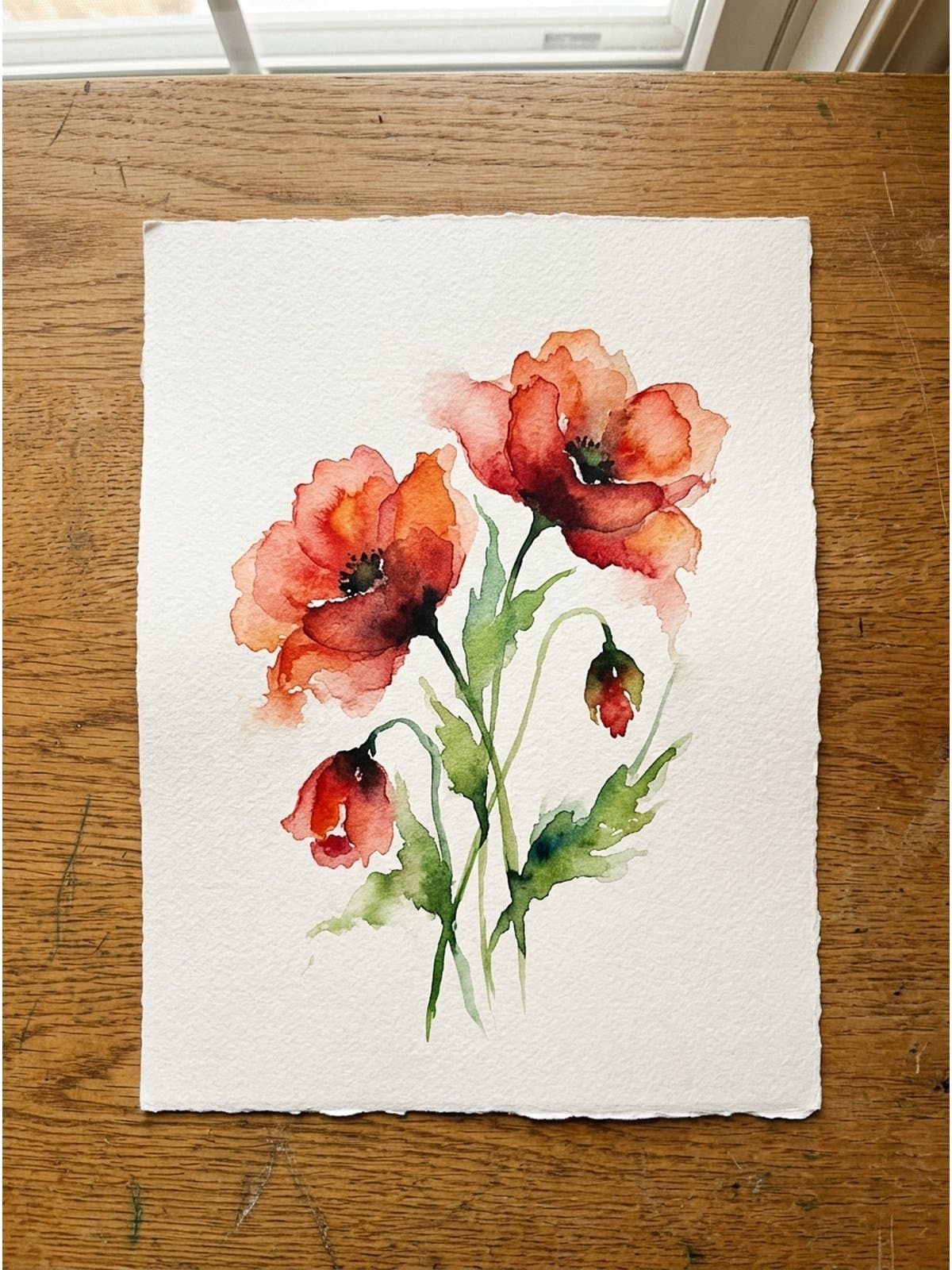
Watercolor poppies are essentially three loose petal shapes plus a dark center. That’s it. Drop watery scarlet onto wet paper, let it bleed, add a darker red while still damp for the shadow side, and finish with a tiny black-violet center while everything’s mostly dry. Five minutes per bloom, maximum.
Difficulty: very easy.
Daisies
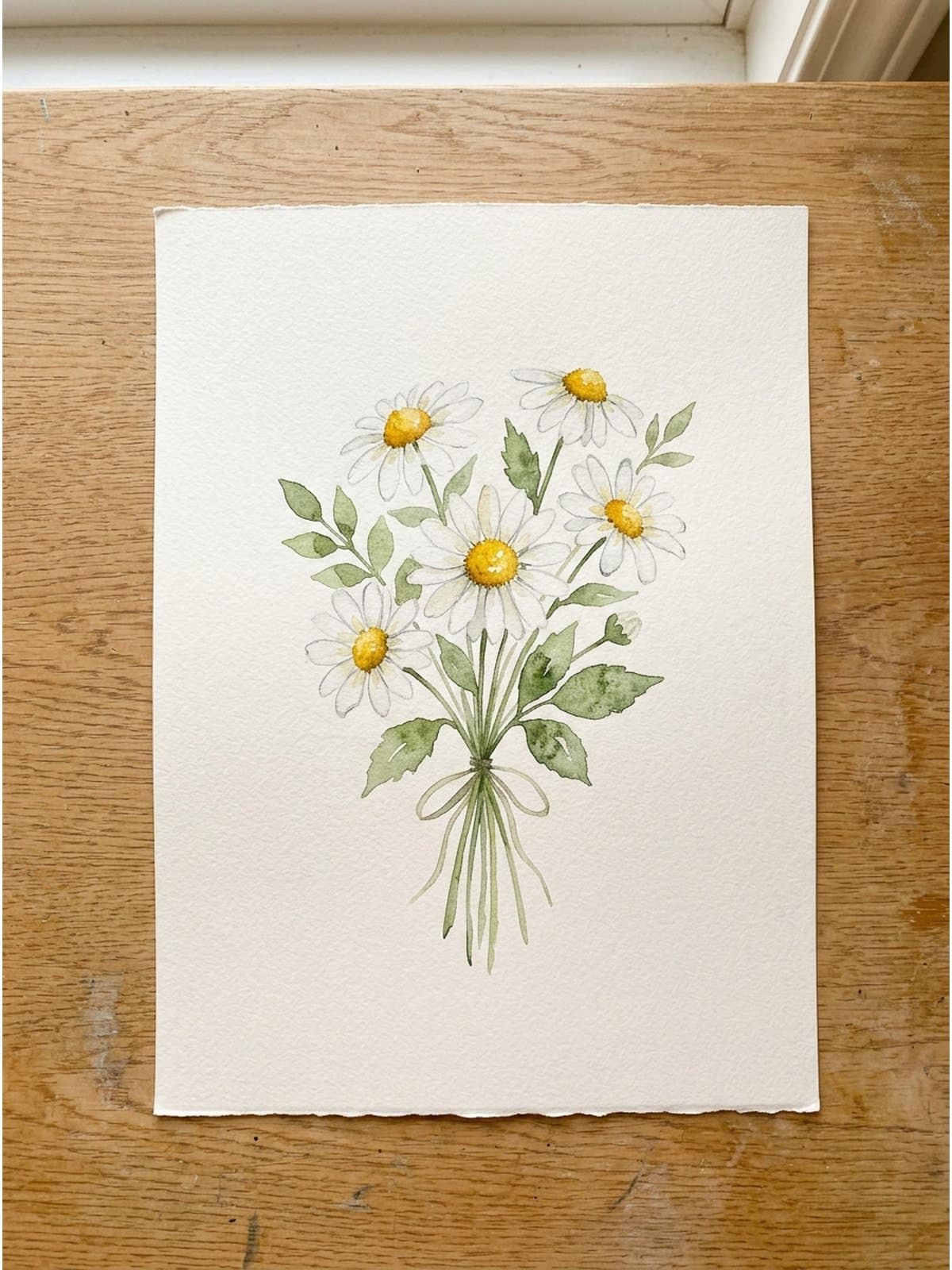
The trick with daisies is to not paint the petals at all — paint the negative space around them. Lay down a soft wash of sage green and cream, then use a clean damp brush to lift the petal shapes out. Drop a sunny yellow center in last. The white of the paper becomes the petals.
Difficulty: very easy.
Lavender sprigs
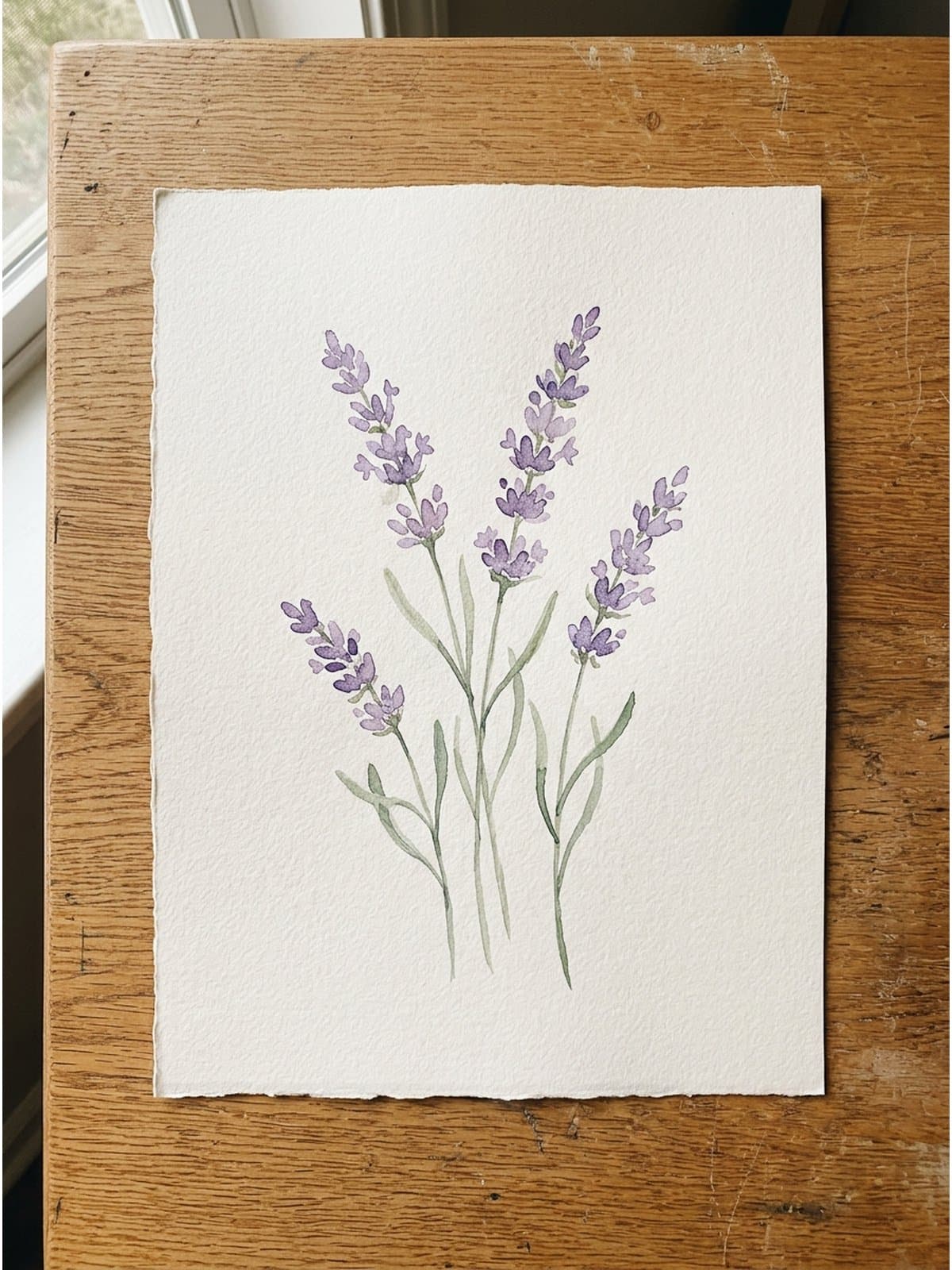
Lavender is essentially tiny dabs of dusty purple stacked along a sage stem. Use the tip of a size 6 round brush, dab on damp paper for soft edges, and resist the urge to define every floret. The looser, the better. Three sprigs in a cluster makes a finished little study.
Difficulty: very easy.
Hydrangeas
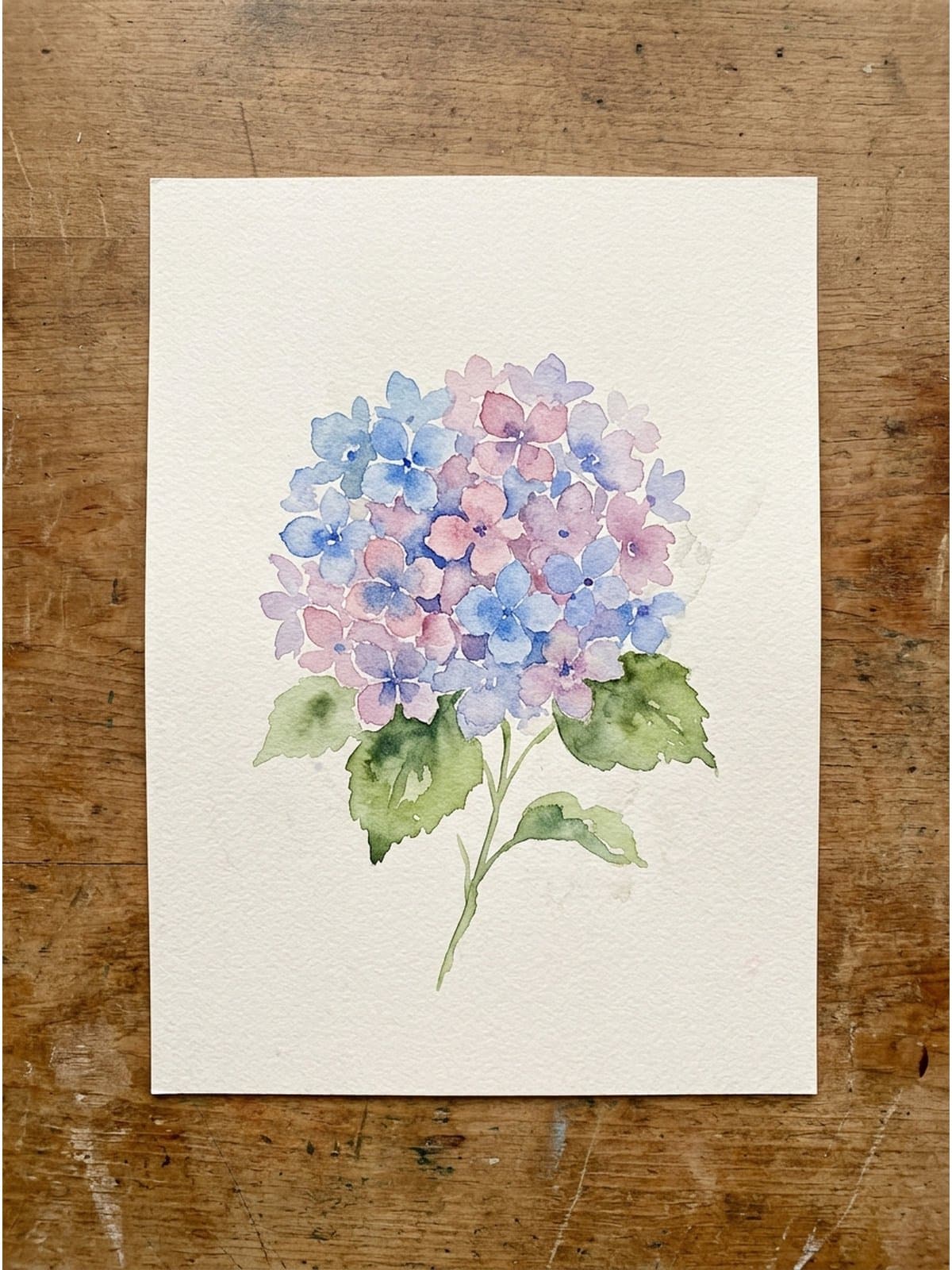
Hydrangeas love wet-on-wet. Wet a roughly circular area, drop in dusty blue, dusty pink and a touch of lilac, and let them blend on the paper. Once it’s mostly dry, add a few tiny four-petal shapes in slightly darker pigment to suggest the cluster structure. Done.
Difficulty: very easy.
Wildflower bouquets
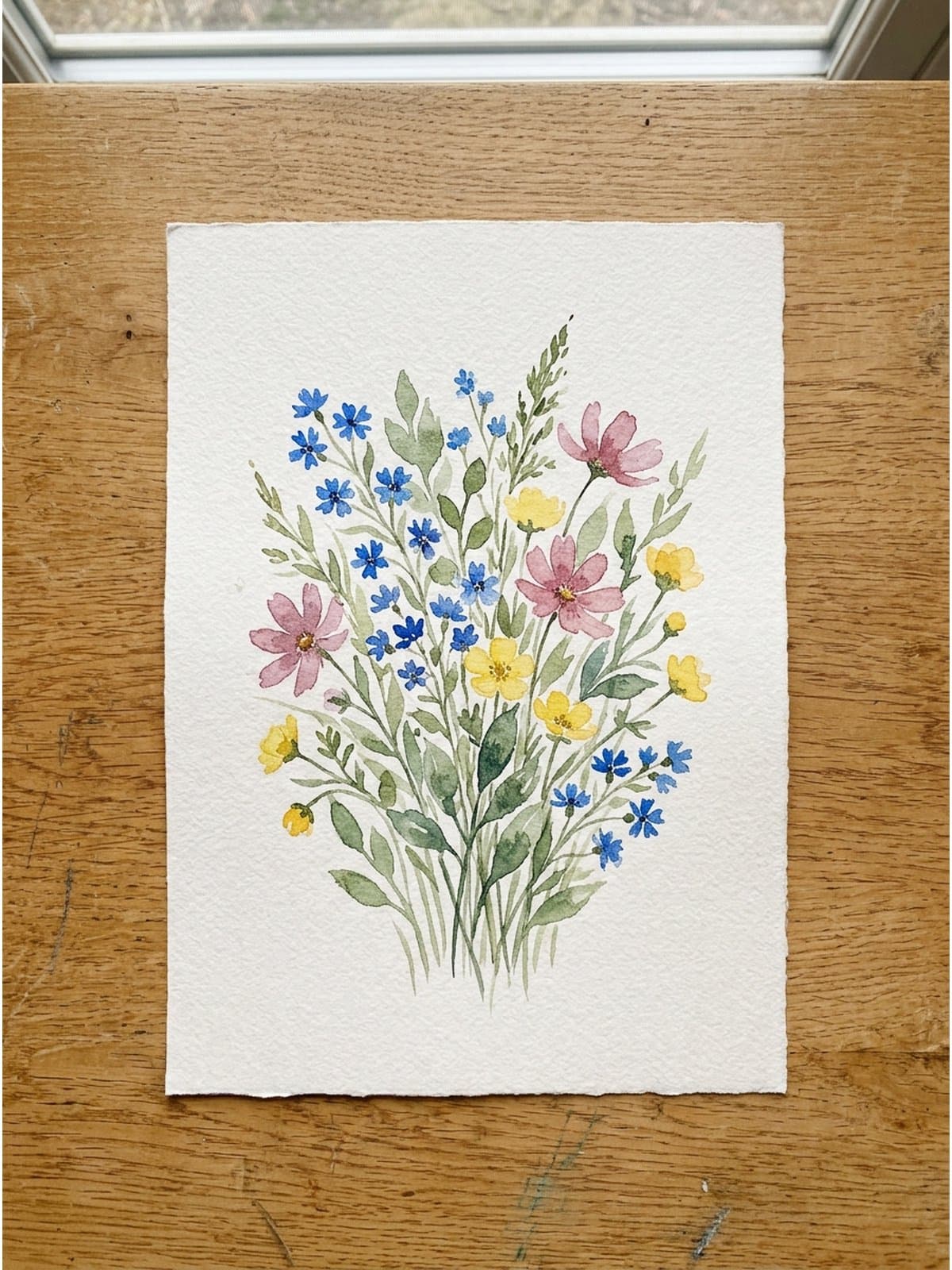
A wildflower bouquet is the most forgiving subject in watercolor. Mix small dabs of cornflower blue, dusty pink, butter yellow, and tiny green stems. Vary the size, leave plenty of negative space, and aim for cottagecore-meadow energy. Each flower can be just two or three strokes.
Difficulty: very easy.
5 intermediate flowers worth tackling next
Quick answer: Once you’re comfortable with the easy five, the natural next step is sunflowers, tulips, peonies, roses, and magnolias. Each one introduces a new skill: sunflowers teach textured centers, tulips teach petal structure, peonies teach color layering, roses teach spiral logic, and magnolias teach large bold petal forms.
These are the flowers most people want to paint eventually — sunflowers especially are having a moment on Pinterest right now, and they’re genuinely satisfying once you have a few wet-on-wet sessions under your belt. The trick is to add complexity one flower at a time. Don’t try to nail all five in one weekend; pick one per session and let yourself really study it.
Sunflowers
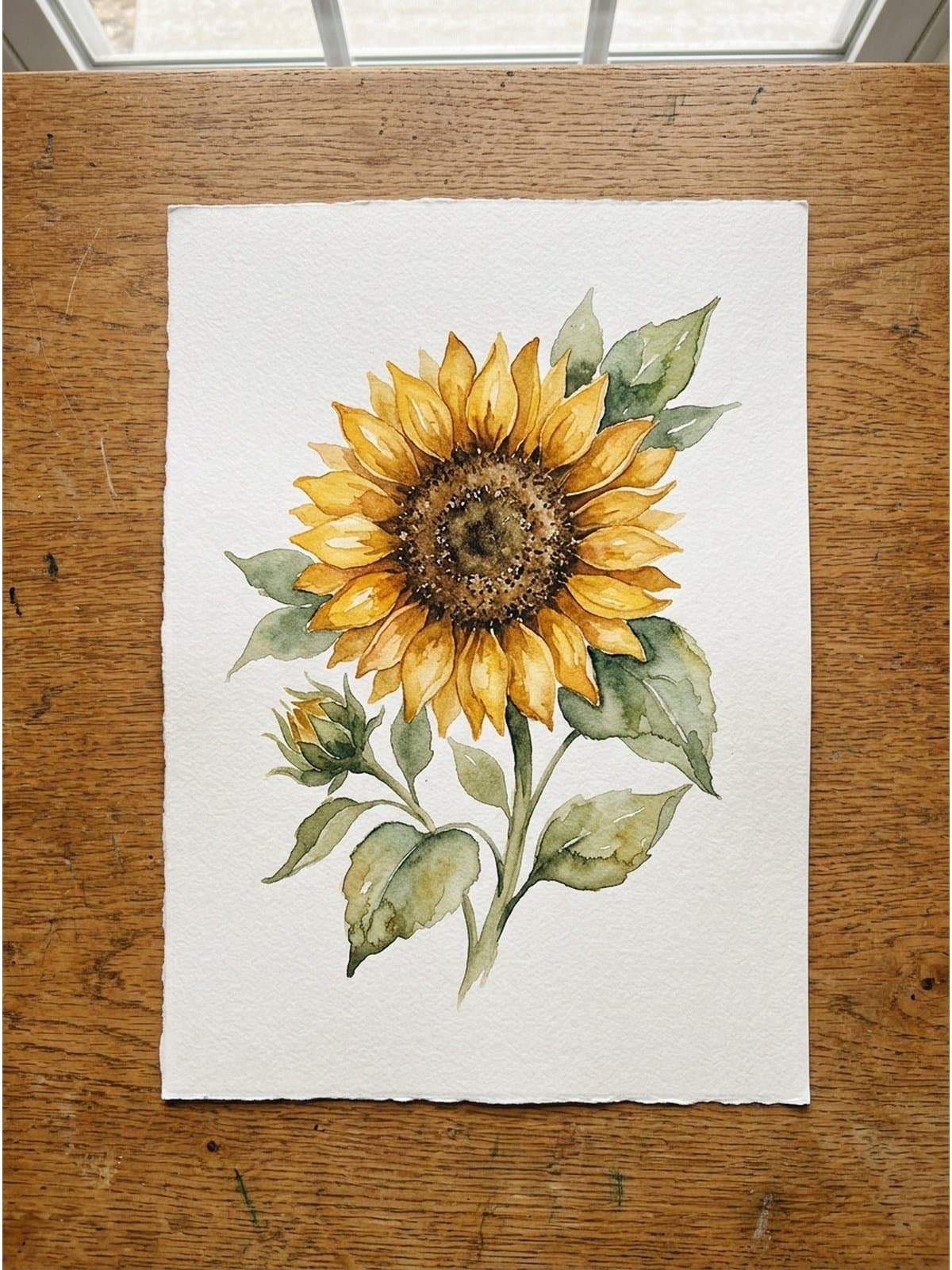
Sunflowers are the SEO darling of watercolor right now and for good reason — they’re cheerful. The whole flower is golden-yellow radiating petals around a textured brown center. The secret to a great sunflower is the center: drop wet umber, raw sienna and a touch of indigo, and let the colors granulate. Once dry, dab a smaller brush in deep brown for the seed pattern. The petals should be loose and slightly imperfect.
Difficulty: intermediate.
Tulips
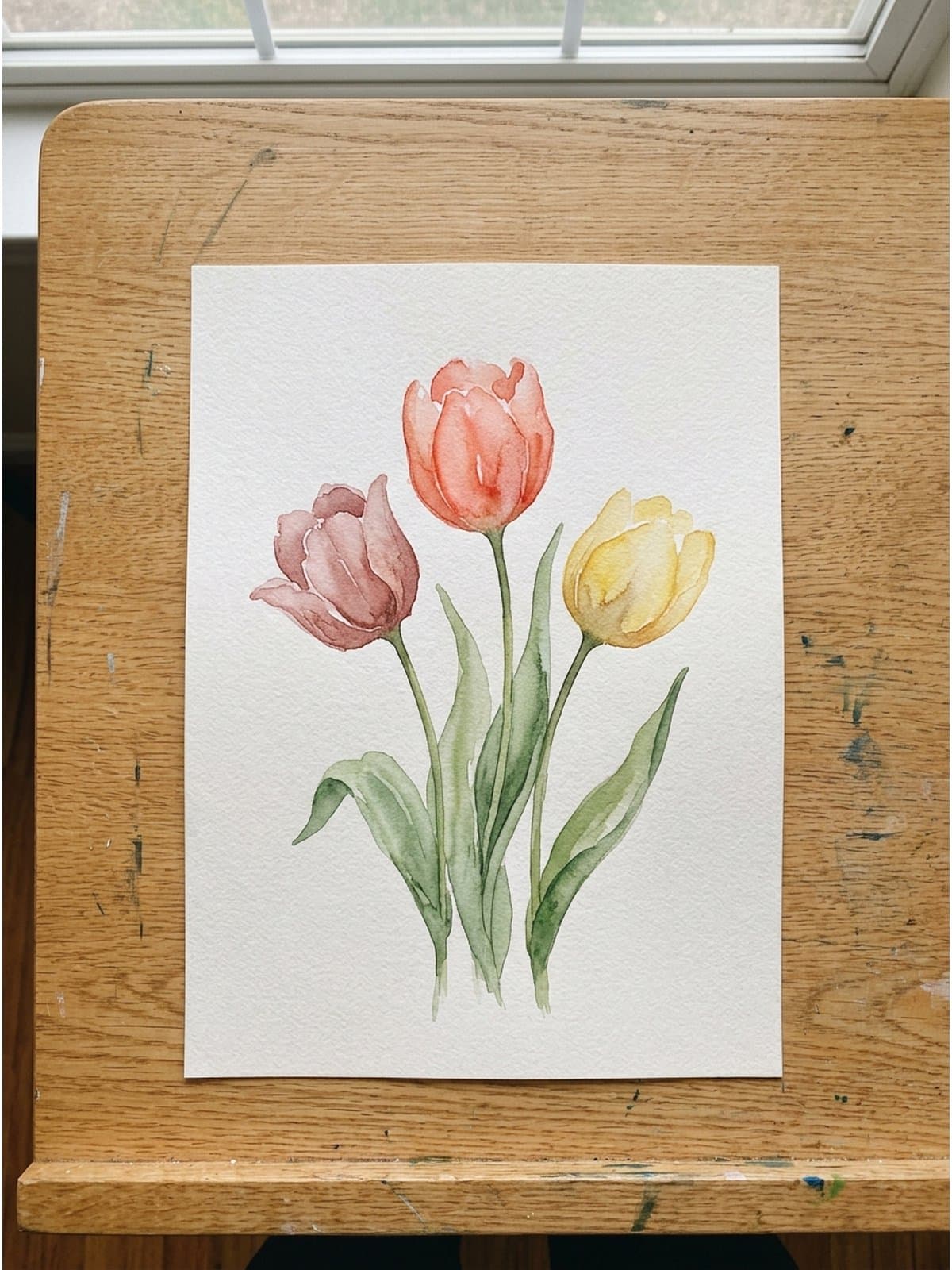
Tulips are about petal form. Each bloom is essentially three teardrop shapes that meet at the top. Start with a clean wet-on-wet wash for each petal, leaving a thin white gap between them so they don’t bleed into one mush. Add a second darker layer once dry to shape the shadow side. Slender green leaves finish the look.
Difficulty: intermediate.
Peonies
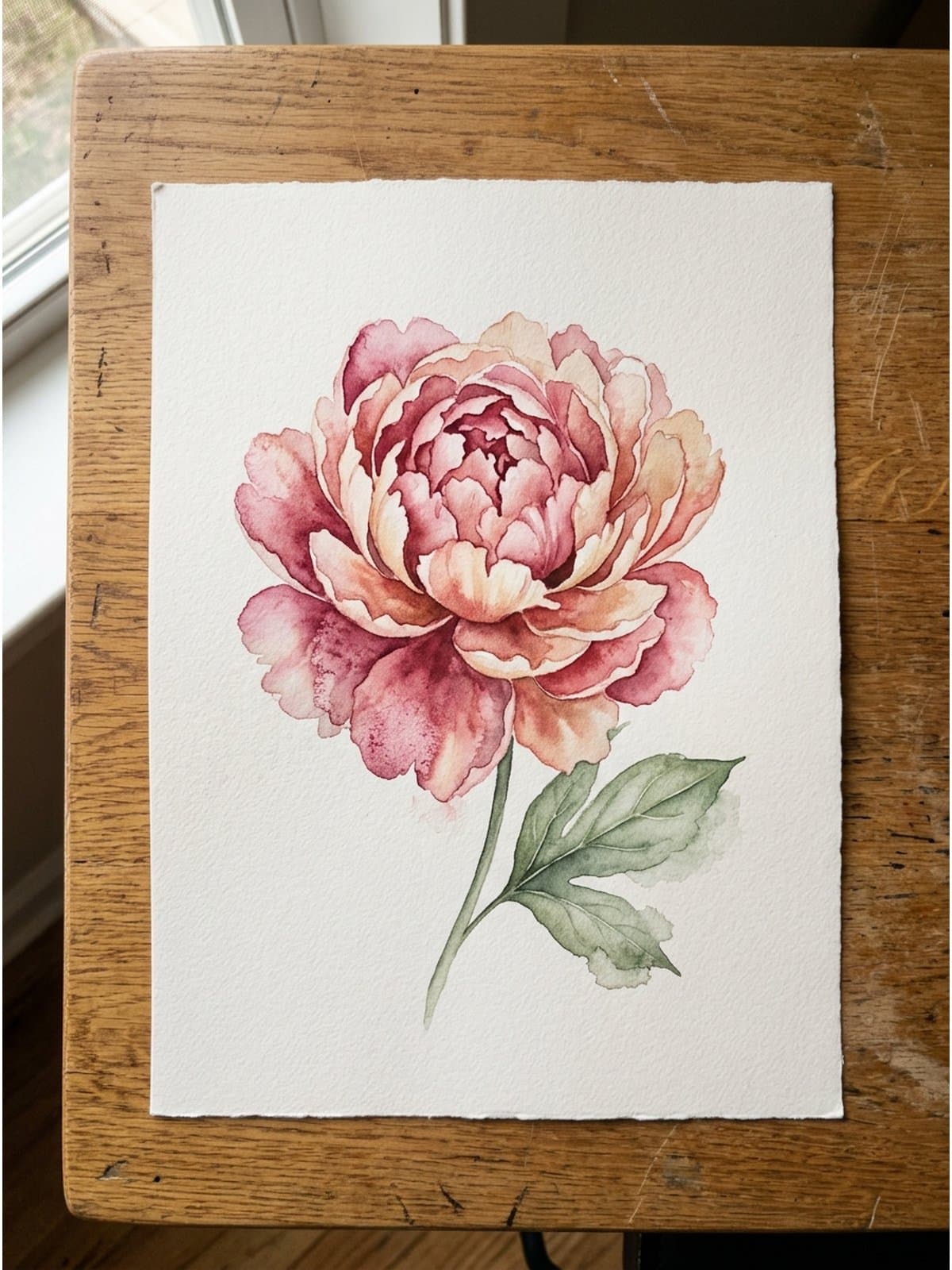
Peonies are a color-layering exercise. Start with the palest blush wash for the whole bloom, let it dry, then build deeper rose tones in the shadowed petals only. Keep the center darker than the outer petals. The ruffled-petal look comes from not outlining every petal — let the wet-on-wet bleed suggest the layers instead.
Difficulty: intermediate.
Roses
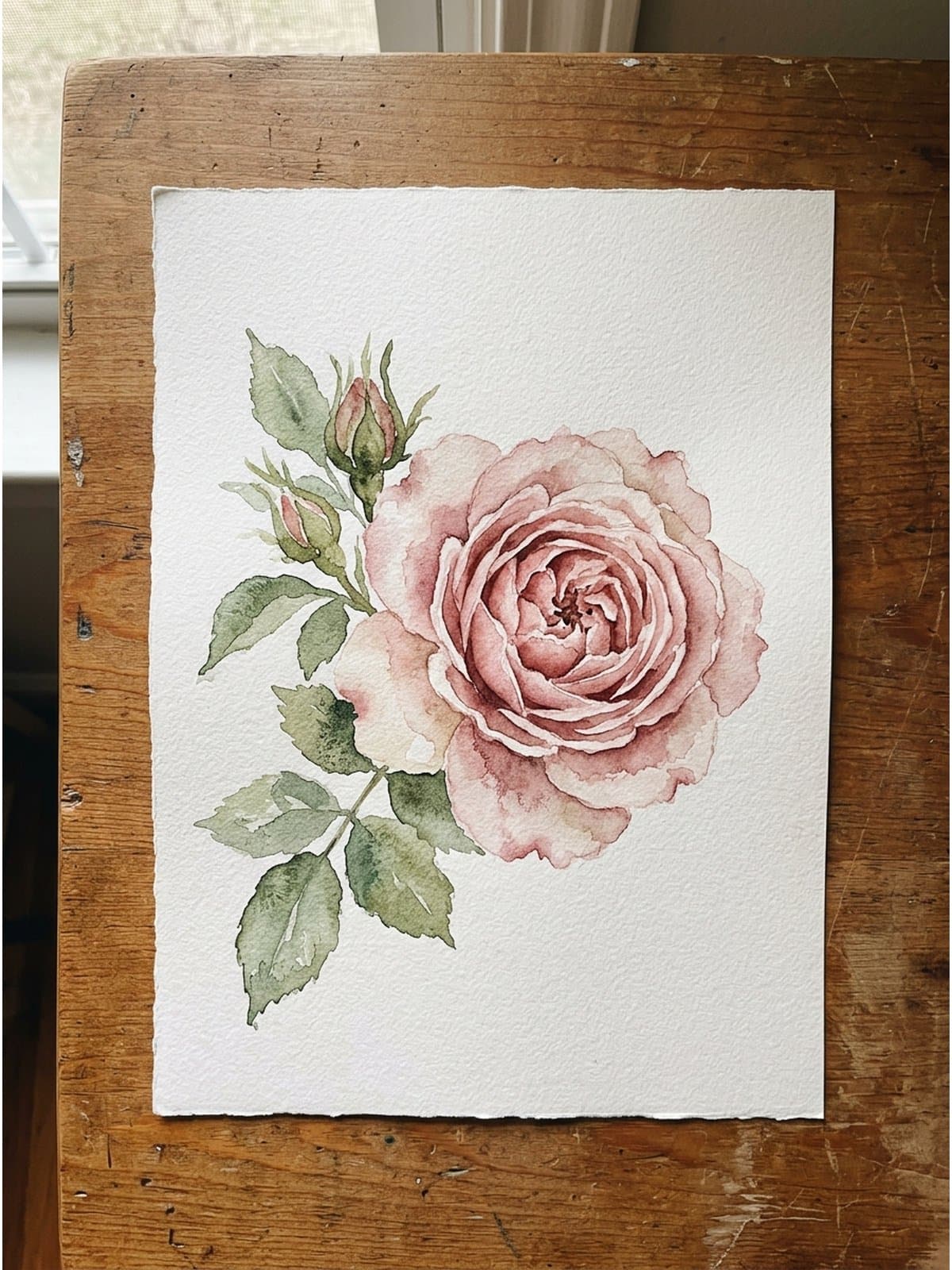
Roses are spirals from the center out. Beginners get stuck because they try to paint petal shapes; experienced painters paint the spiral logic instead. Start with a tight dark dot in the center, then build outward in loosely concentric curves of soft pink, letting each ring be slightly larger and lighter than the last.
Difficulty: intermediate.
Magnolias
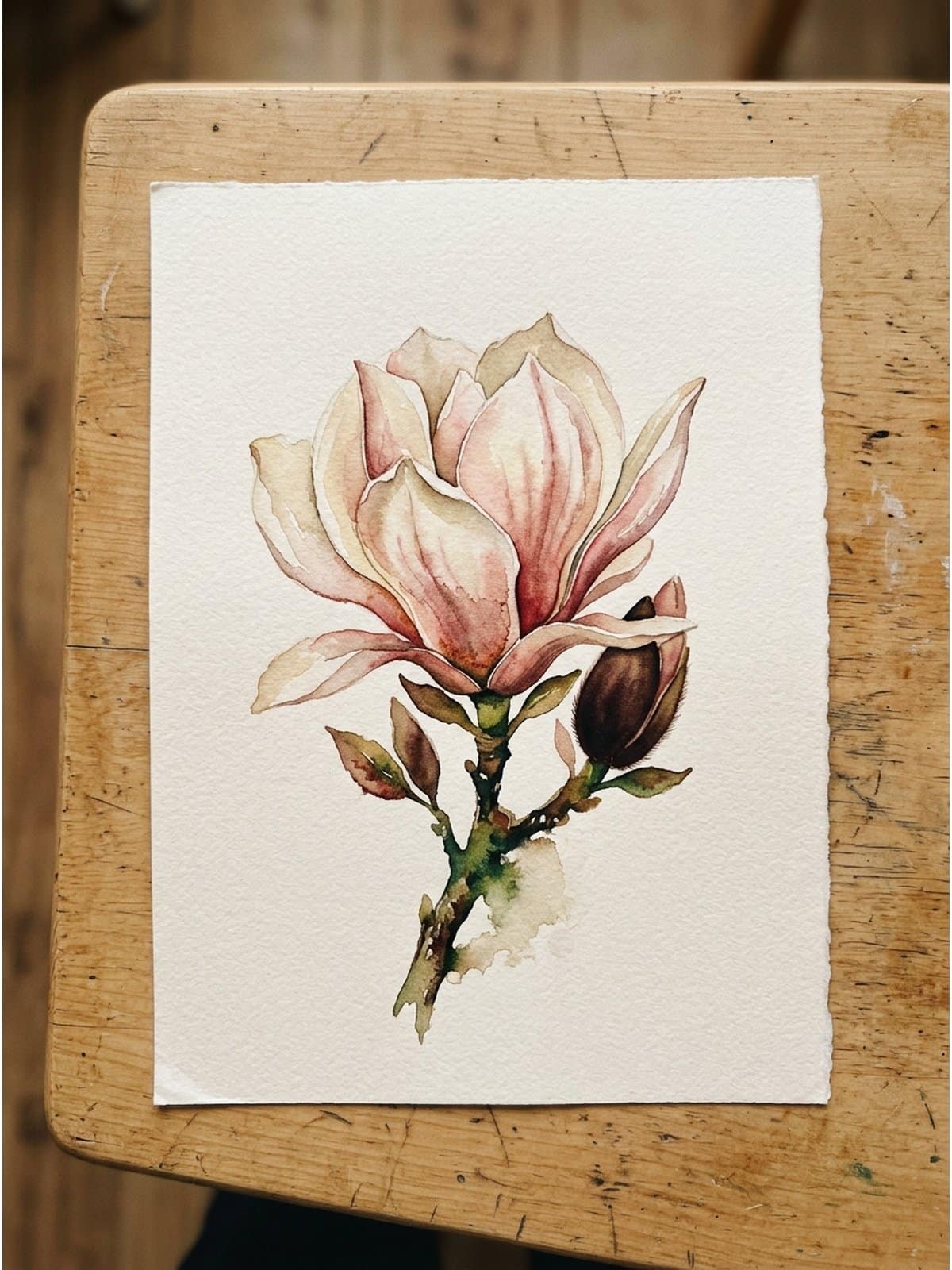
Magnolias are about bold, confident petal shapes. Each petal is a generous teardrop with blush pink at the base fading to cream at the tip — perfect wet-on-wet practice. Don’t overwork it. Three to five petals is plenty, with a velvety dark center bud.
Difficulty: intermediate.
3 advanced flowers for when you’re ready to push yourself
Quick answer: The three advanced watercolor flowers worth working up to are orchids, irises, and dahlias. These require multi-layer glazing, a clearer understanding of petal structure, and the patience to wait between drying stages. Don’t rush them.
These three are advanced not because the techniques are different — they’re still loose watercolor — but because the petal architecture is more complex and the color subtlety needs more control. Treat them as a reward, not a starting point.
Orchids
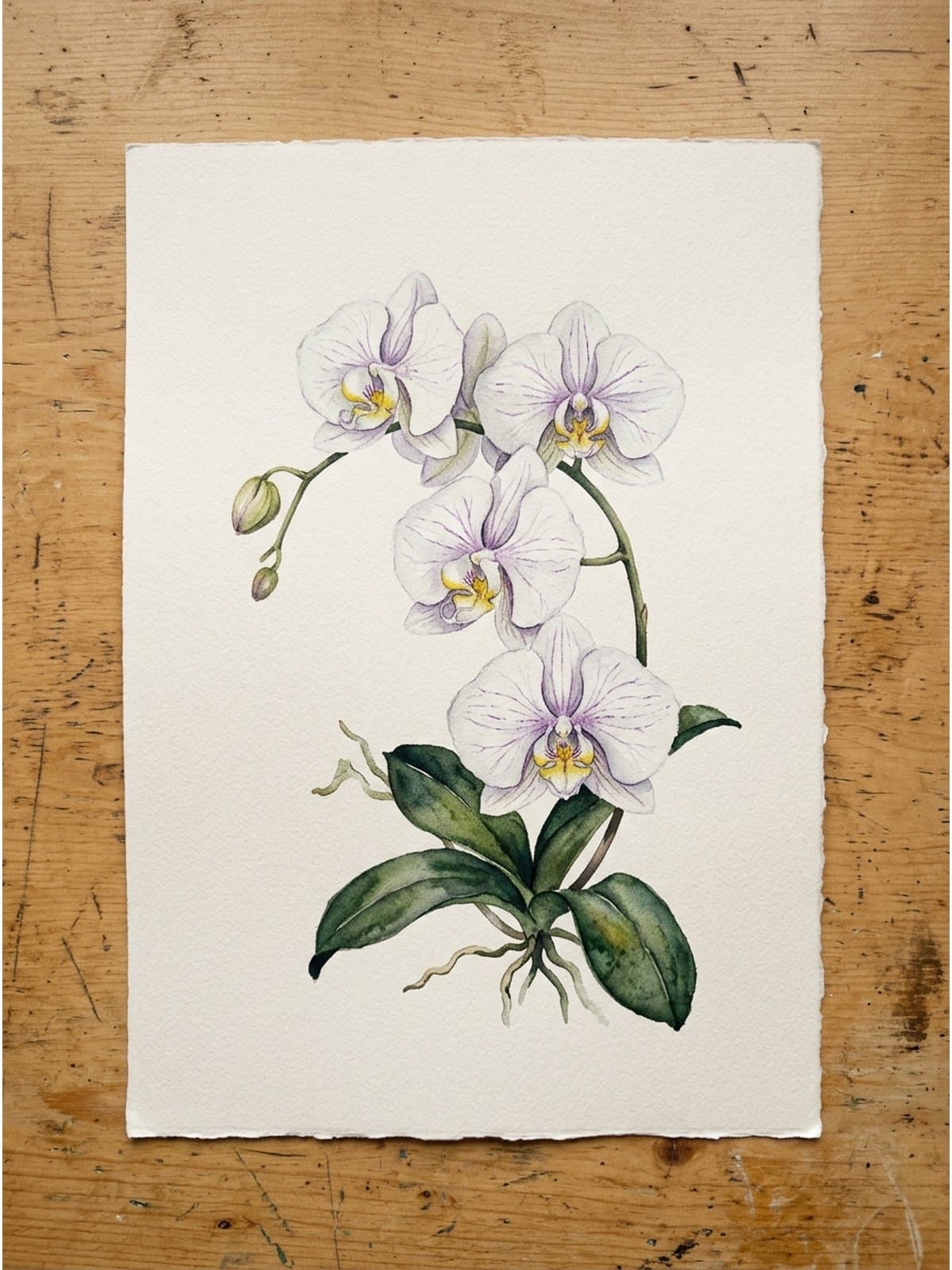
White phalaenopsis orchids look impossible but are mostly a study in shadow. The petals are white paper — what you paint is the soft grey-mauve shadows that give them form. Light purple veining and a yellow center finish it. The discipline is leaving enough white paper untouched.
Difficulty: advanced.
Bearded irises
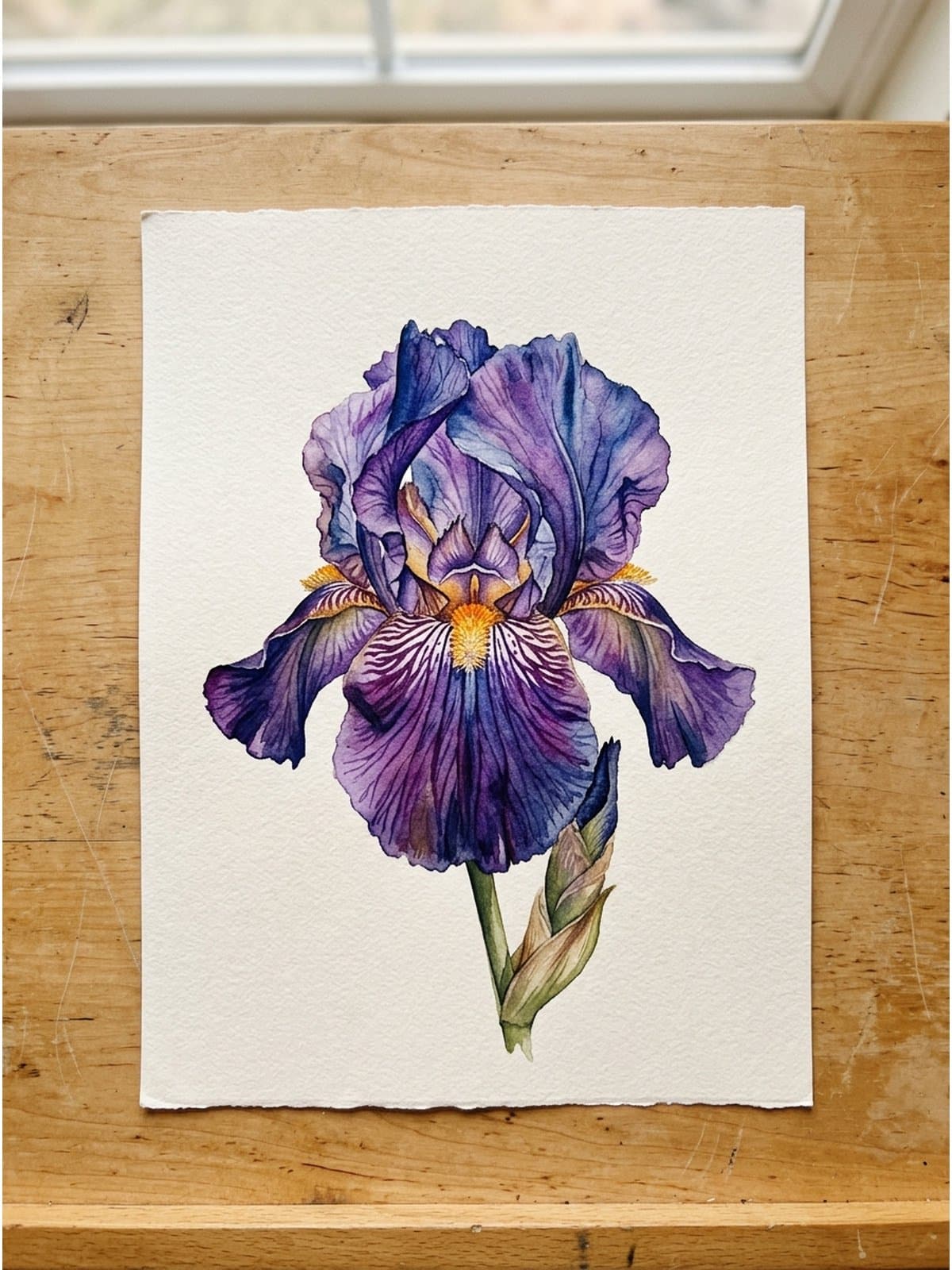
Irises have a distinct architecture — three upright ‘standards’ and three drooping ‘falls’ — and they reward research before painting. Block in the violet and indigo wet-on-wet, let everything dry, then add the golden-yellow beard and darker vein lines on top. Patience pays off.
Difficulty: advanced.
Dahlias
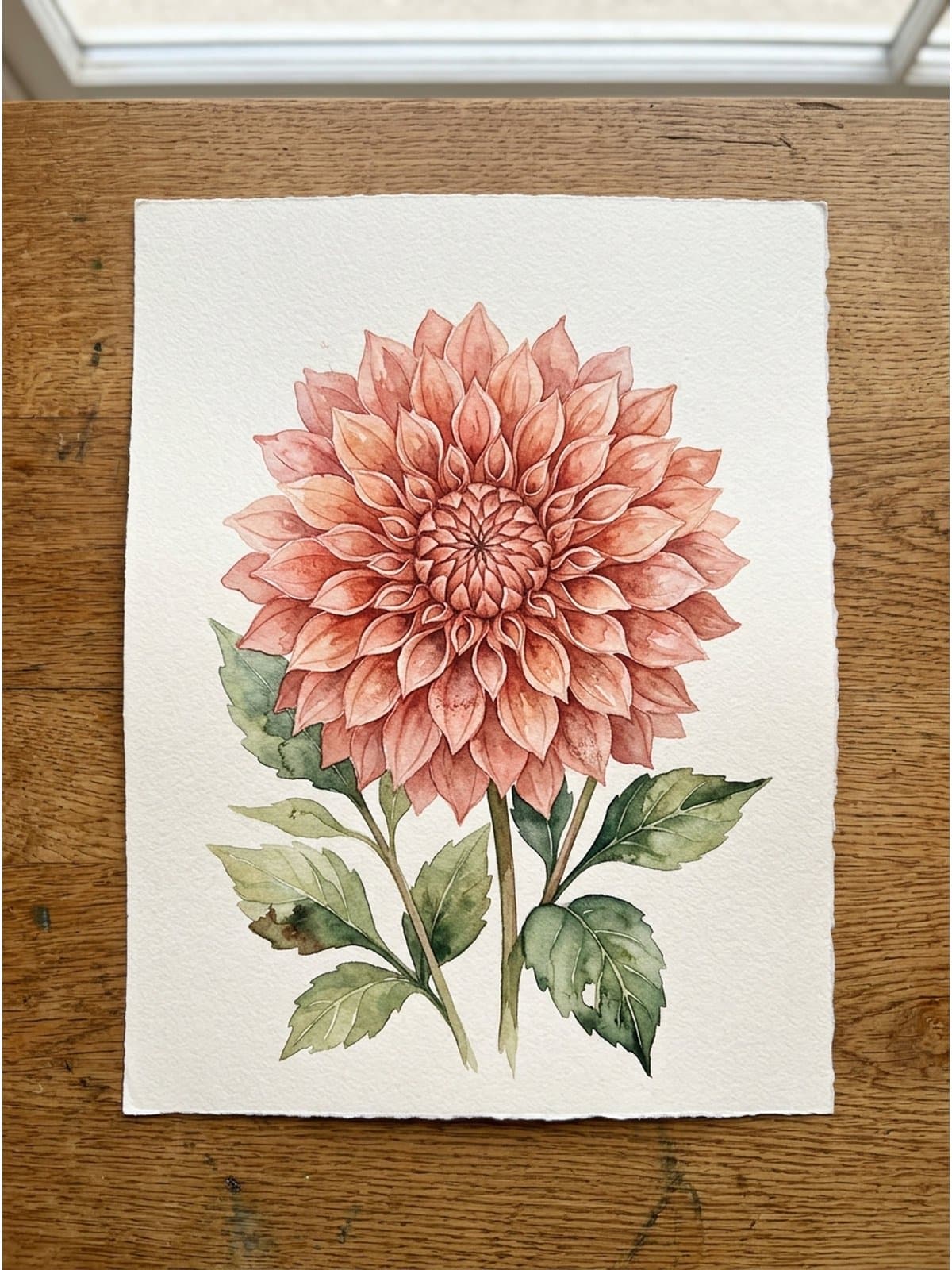
Dahlias are the spiraled-petal mountain. Start at the dark center, then paint each ring of pointed petals slightly looser than the last. The center stays tight; the outer petals loosen into wet-on-wet. Coral and dusty rose is a beginner-friendly palette before you tackle the vivid colors.
Difficulty: advanced.
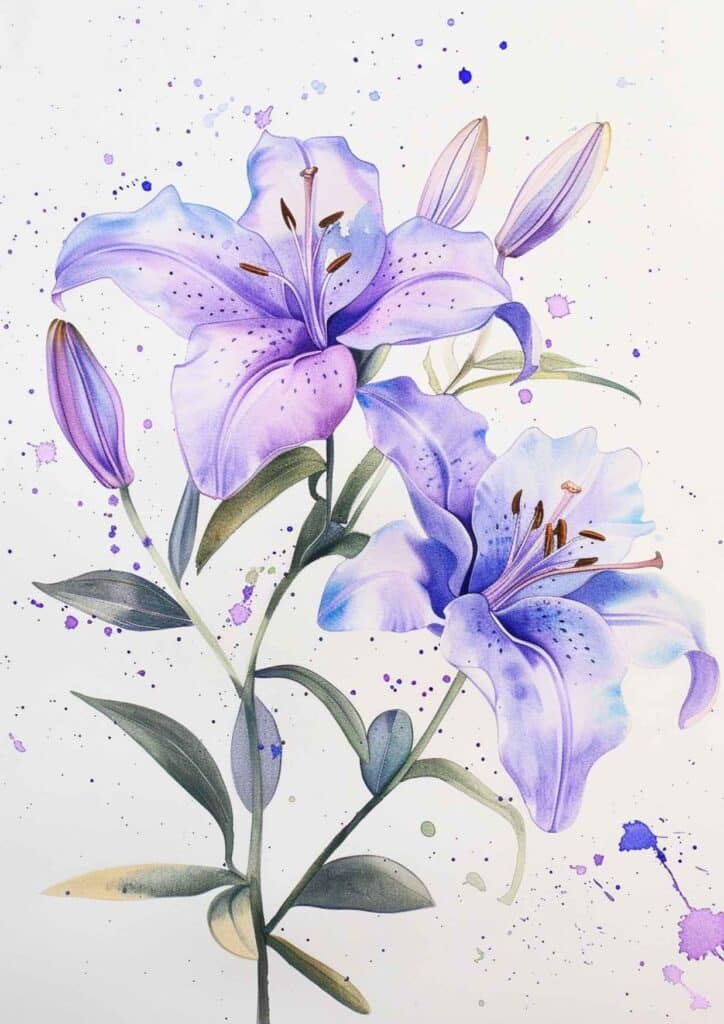
Want to see even more variety before you pick a flower? Here’s a quick overview of 60+ watercolor flower ideas from across the blog — bookmark this section for inspiration.
60+ Watercolor Flowers Painting Ideas
Using Your Free Watercolor Flower Templates
These templates are designed to take the guesswork out of sketching flowers, allowing you to focus on the fun part – painting! Here’s how to use them:
- Print and Trace: Print out your chosen template on regular printer paper. You can even experiment with different paper textures later on. Place the template over your watercolor paper and lightly trace the flower outlines with a pencil.
- Wet-on-Wet Technique: For a soft, diffused look, wet the area inside the flower outlines with clean water before applying your paints. This will allow the colors to blend and create beautiful gradients.
- Layering Colors: Start with lighter shades and gradually build up to darker tones. This will create depth and dimension in your flowers.
- Add Details: Once the base layers are dry, use a smaller brush to add details like veins, petals, and stamen. You can even try adding some splatters or drips for a whimsical touch.
- Experiment and Have Fun: Don’t be afraid to experiment with different colors, techniques, and compositions. There are no rules in watercolor – just let your creativity flow!
The 4 watercolor techniques every flower painter needs
Quick answer: Four techniques cover 90% of watercolor flower painting: wet-on-wet (soft petal bleeds), wet-on-dry (sharp petal edges), lifting (pulling pigment out for highlights), and glazing (layered transparent washes for depth). Master these four and you can paint any flower.
Wet-on-wet
Pre-wet the paper, then drop pigment into the damp area. The pigment spreads and softens on its own — perfect for hydrangea blooms, peony petals, and any flower where you want a dreamy, atmospheric edge.
Best for: hydrangeas, peonies, poppies, wildflower meadows.
Wet-on-dry
Apply paint to dry paper for crisp, defined edges. This is how you keep a tulip petal from bleeding into the next one, or give a sunflower’s individual petals their distinct shape.
Best for: tulips, roses, sunflowers, magnolias.
Lifting
Take a clean damp brush (or a tissue) and pull pigment back out of a still-wet wash. Use this for highlights, light petal tips, and the white centers of daisies. It’s an undo button for watercolor.
Best for: daisies (negative-space petals), highlights on any petal, soft sky behind blooms.
Glazing
Once a wash is fully dry, lay a thin transparent layer of a different color on top. This builds depth without muddying your colors. Use it to deepen shadows in roses, add veining to irises, or warm up the center of a peony.
Best for: roses, irises, peonies, anything needing color depth.
5 beginner mistakes that make watercolor flowers look muddy
Quick answer: The five most common beginner mistakes are: too much water on the brush, painting over still-wet washes, using too many colors at once, overworking the petals, and skipping the wait for drying. Fix any one of these and your paintings improve overnight.
1. Too much water on the brush
Most muddy watercolor flowers come from a soaked brush dumping a puddle of dilute pigment onto the page. Touch your brush to a paper towel after dipping; you want it damp, not wet. A controlled brush gives you control over the bleed.
Fix: blot before every stroke. The brush should glisten, not drip.
2. Painting over still-wet washes
If you add a darker color to a wash that’s halfway dry, you get an unpleasant ‘cauliflower’ bloom — a hard ring where the new pigment hit the damp area. Either paint into a properly wet wash (it blends) or wait until it’s completely dry (then it glazes cleanly).
Fix: paint wet-on-wet OR fully dry. Avoid the half-wet middle.
3. Using too many colors at once
Five different pigments in one petal turns brown. Pick a limited palette per flower — for a rose, try just two reds plus one shadow color. Restraint is the difference between vibrant and muddy.
Fix: three pigments per flower, maximum.
4. Overworking the petals
Watercolor punishes fussiness. The more times you go back over a petal, the more the underlying layers lift and mix, and the more you lose the freshness. Make a decision, commit, and move on.
Fix: paint each petal in one or two strokes, then leave it alone.
5. Skipping the wait for drying
Real drying time between layers is non-negotiable. A hairdryer on cool can speed things up, but check by touching a corner — if it’s cool, it’s still wet. Patience is half the technique.
Fix: walk away between layers. Make a cup of tea.
What you can do with your finished watercolor flowers
Finished watercolor flowers work well as handmade greeting cards, framed wall art, personalised gifts, scrapbook and journal decoration, and simple embellishments for tote bags, phone cases or furniture.
- Greeting Cards: Turn your floral creations into beautiful handmade greeting cards for birthdays, anniversaries, or any special occasion.
- Wall Art: Frame your paintings and create a stunning gallery wall or use them as individual accents throughout your home.
- Gifts: Watercolor flower paintings make thoughtful and unique gifts for friends and family. You can even personalize them with names or initials.
- Scrapbooking and Journaling: Decorate your scrapbooks or journals with your watercolor flowers to add a touch of nature and whimsy.
- DIY Projects: Use your paintings to embellish plain tote bags, phone cases, or even furniture.
Don’t forget to share your watercolor flower creations with me on social media! I can’t wait to see what you come up with.
Essential Watercolor Painting Supplies List
This is our go-to list of recommended watercolor painting supplies that we use for all our watercolor art, junk journaling, and art journaling!
**This page may contain affiliate links to products I have used or recommend. If you purchase something from this page, I may receive a small percentage of the sale at no extra cost to you.**
- Watercolors: Windsor & Newton is a reputable brand that offers high-quality watercolor paints. You can choose from their range of professional-grade watercolor tubes or pans, depending on your preference.
- Watercolor Paper: Look for cold-pressed, 140lb (300gsm) watercolor paper for the best results. This type of paper is durable and has a nice texture that’s ideal for watercolor painting.
- Brushes: A selection of round and flat brushes in various sizes will give you the versatility you need for different strokes and details. Sable or synthetic brushes designed for watercolor will give you the best performance.
- Palette: A mixing palette with wells for both mixing and holding your paints is essential. It can be a simple plastic one or a porcelain palette for a more luxurious feel.
- Water Container: Any clean jar or container will do, but having two for clean and dirty water can help keep your colors pure.
- Masking Fluid: This is used to cover areas of your painting that you want to keep white. Make sure to apply it with an old brush or a dedicated masking fluid brush, as it can ruin fine bristles.
- Pencils: A soft pencil, like a 2B, is great for sketching your design before painting.
- Eraser: A kneaded eraser is gentle on watercolor paper and can lift pencil lines without damaging the surface.
- Paper Towels or a Rag: These are useful for blotting your brush to control the amount of water and paint.
- Board: If you’re using watercolor paper from a pad or sheets, you might want to tape your paper down to a board to prevent warping.
🎨 Want more free printables? Browse my Free Printables Library — over 400 free templates, coloring pages, drawing guides, and creative resources all in one place!
Want more watercolor flower templates every month?
If you love these free templates, you’d really enjoy my Patreon. Every month I drop a new watercolor template set — sometimes seasonal florals, sometimes a themed bouquet pack, always something you can print and paint that weekend. Plus the full back catalogue, painting walkthroughs, and colour recipes.
It’s a small monthly tier and it’s the simplest way to keep a fresh stack of watercolor templates landing in your inbox. See what’s inside the Patreon →
Frequently asked questions about watercolor flowers
What are watercolor flowers and why are they a good starting subject?
Watercolor flowers are loose, painterly floral paintings made with water-based pigments on watercolor paper. They’re the best entry point into watercolor for beginners because the medium’s natural tendency to bleed and granulate is exactly what makes flowers look alive — you don’t need careful drawing or photo-realistic detail. Loose, slightly imperfect petals read as flowers just as well as careful ones, often better.
What is the easiest flower to paint in watercolor?
Poppies are widely considered the easiest watercolor flower for beginners. They’re essentially three loose red petal shapes plus a dark center — about five minutes per bloom. Daisies, lavender, hydrangeas and wildflowers are also very forgiving.
What watercolor supplies do I need to paint flowers?
Three essentials: a basic student-grade watercolor set (12 pans is plenty), cold press watercolor paper at 140lb / 300gsm, and two round brushes — a size 6 for petals and a size 10 for washes. You can add a kneaded eraser, a 2B pencil, and a ceramic palette as you go. Full affiliate-linked list is in the supplies section above.
How long does it take to learn watercolor flowers?
You can paint a recognisable watercolor flower on your very first session — something like a loose poppy or a wildflower sprig. Building up to confident peonies and roses usually takes 4–6 weeks of practising twice a week. The four core techniques (wet-on-wet, wet-on-dry, lifting, glazing) cover 90% of what you’ll need.
Why do my watercolor flowers always look muddy?
Almost always one of five culprits: too much water on the brush, painting over a half-dry wash, mixing too many pigments per flower, overworking the same petal, or not waiting long enough between layers. The section above on beginner mistakes covers each fix in detail — nailing any one of them noticeably improves your work.
Can I use these templates if I’m not good at drawing?
Yes — that’s the whole point. The free 23-template printable pack gives you ready-made flower outlines to trace lightly onto your watercolor paper, so you can skip the drawing stage and go straight to painting. Trace, then erase the lines almost completely before painting so the pencil doesn’t show through.
Do I need expensive paint to paint flowers well?
Not at all. Student-grade sets from Winsor & Newton Cotman or similar are more than enough to learn on. The biggest jump in quality comes from the paper, not the paint. A 140lb cold press paper that doesn’t buckle is worth more than fancy pigment in those first few months.
How do I download the free watercolor flower templates?
Enter your email in the form at the top of this post and the 23-template PDF lands in your inbox within a couple of minutes. If you don’t see it, check your spam folder or promotions tab. Once you’re on the list, you’ll also get my weekly newsletter with fresh watercolor walkthroughs and seasonal template drops.
Can I sell paintings made using your templates?
Yes — the finished paintings are your own original artwork. The templates are for personal/commercial use as a starting reference. You can sell the resulting paintings, make greeting cards, print them on tote bags, the lot. You just can’t resell the blank templates themselves.
What’s the best paper for beginner watercolor flowers?
Cold press, 140lb (300gsm), 100% cotton if you can stretch to it (Arches, Fabriano Artistico) or cellulose-based for budget options (Canson XL is the standard beginner pad). The cold press texture grips pigment beautifully and the 140lb weight prevents buckling when you work wet-on-wet.
Pick one flower and paint it this weekend
Don’t try to work through every flower in this guide. Pick one. Print the matching template from the free pack, set up your paper and a glass of water, and give yourself half an hour. Painting one flower well is worth ten rushed attempts.
And if you want to watch me paint along instead of reading, my YouTube channel has step-by-step watercolor flower walkthroughs every week — anemones, peonies, wildflowers, loose botanicals. Subscribe to Artsydee on YouTube so you don’t miss the next one.
Share your watercolor flower paintings with me on Instagram (@artsydee_inspiring_creations) or pin them on Pinterest — I love seeing what people create with these templates.
You might also like
- Easy Watercolor Practice Ideas for Absolute Beginners
- Tiny Watercolor Florals for Sketchbooks
- Loose Watercolor Flowers Tutorial
- Beginner Watercolor Templates (Free)
- Easy Watercolor Sketchbook Ideas
- 45+ Watercolor Painting Ideas for Beginners
Pin this for later 📌
If these free flower templates got your brush moving, my premium reference sets on Patreon go deeper — finished florals with colour-recipe cards so mixing each bloom is effortless. From £14 (~$18).
Browse the reference sets →Fancy Painting With Me This Autumn?
If these watercolour flowers have you itching to pick up a brush, I have something for you. I am opening the doors to The Artsydee School of Wonky Watercolour in September — eight weeks of painting together, taught by me, at a pace that fits around real life. Term One is small on purpose: just 50 founding seats, and the waitlist gets first pick.
Thank you for being so generous with your templates & with your talent. I very much appreciate you.
Samantha-jane
Your flower paintings are lovely. Thank you for sharing. You have so many wonderful pages. However, I do wish you would put the name of the flowers so that I know what I am painting/drawing. Thanks again for sharing.
I’m so looking forward to trying watercolour flowers! I’m a relatively newcomer to painting so these will be wonderful.
Thank you!